
Scaling AI Without Losing Control:
3 OutSystems Capabilities That Matter in 2026
In the fast-evolving world of AI-driven software development, enterprises are under increasing pressure to innovate faster, deliver higher-quality digital experiences, and stay competitive.
In 2026, this urgency has never been clearer and OutSystems is emerging as a key enabler of that transformation.
OutSystems Secures Top Spot on G2’s 2026 Best Development Software List
Fresh off its recognition as one of G2’s Top Development Software Products (#11) and Top Global Software Companies (#71), backed by more than 1,400 real customer reviews, OutSystems has demonstrated not only strong market presence but also deep customer trust.
The platform’s ability to accelerate the creation of AI-powered applications, intelligent agents and mission-critical enterprise solutions is redefining how organizations build software at scale. And with OutSystems ranked highest in customer satisfaction within G2’s Enterprise Low-Code Development Grid, the message is clear: enterprises are betting on OutSystems to lead them into an AI-centric future.
In this article, we explore three OutSystems capabilities you simply can’t ignore in 2026 and how they can unlock speed, intelligence and long-term value for your organization.
Addressing the Real Challenges
Let’s be honest: most enterprise IT teams don’t lack tools.
They’re struggling because everything is getting harder at the same time.
- More applications to manage.
- More integrations to maintain.
- More security requirements to meet.
- More pressure to deliver faster than ever.
And now, AI is layered on top of it all.
For CIOs, architects and delivery leaders, the challenge isn’t innovation itself. It’s delivering it without increasing complexity, risk, or technical debt.
This is exactly where OutSystems is evolving and where we see organisations starting to separate progress from chaos.
Below are three capabilities that are becoming essential in 2026 for any enterprise serious about scaling AI and modern delivery.
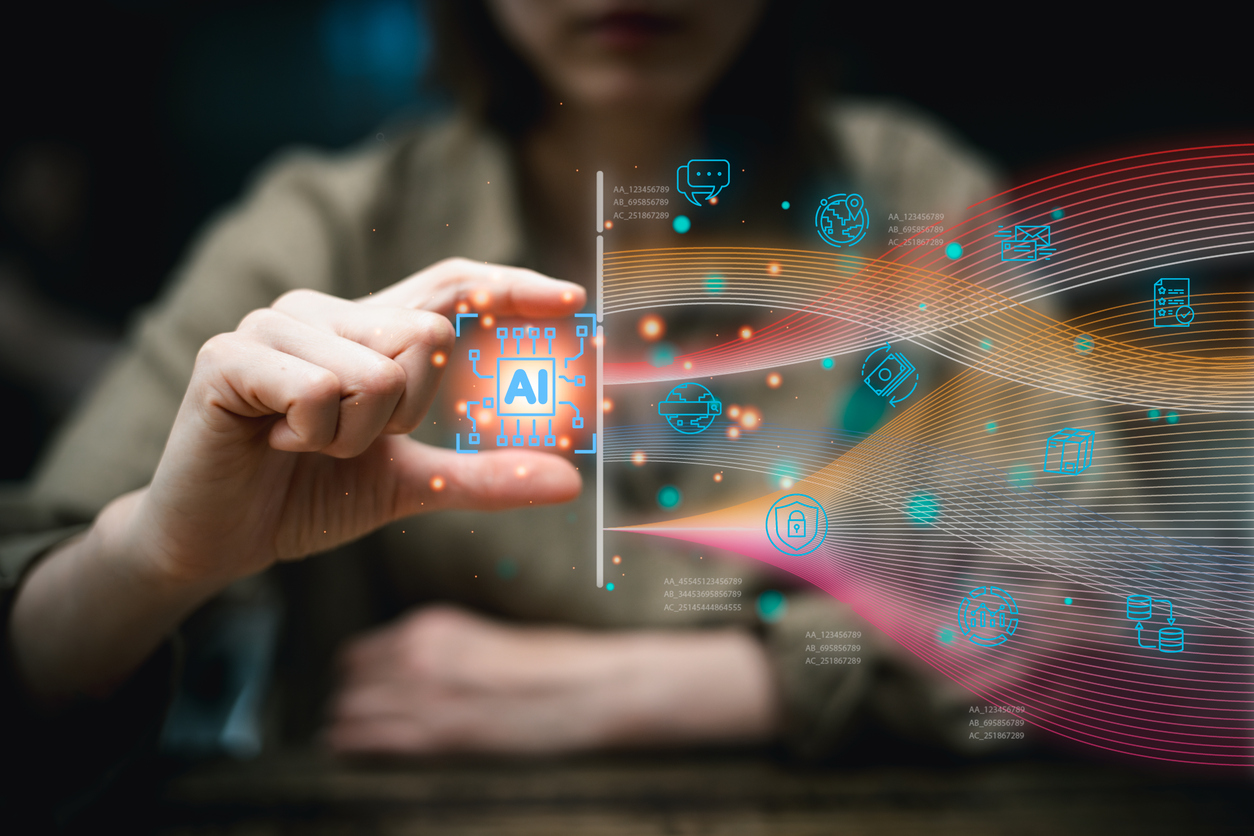
Instead of standalone tools, AI becomes embedded in business processes connected to your systems, governed by design and observable in real time.
In 2026, the organisations pulling ahead won’t be the ones with the most AI pilots. They’ll be the ones where AI is operational: part of daily processes, tied to measurable outcomes and fully under control.


1. From AI Experiments to Operational Workflows
Most organisations have already experimented with AI. And many of those experiments worked.
But very few have successfully scaled them.
Why? Because AI often lives outside core systems disconnected from real workflows, difficult to govern and hard to integrate with legacy environments. Instead of simplifying operations, it adds another layer of complexity.
OutSystems is addressing this with Agent Workbench: a way to design, deploy and orchestrate AI agents directly within enterprise workflows.
This changes the role of AI entirely.
Instead of standalone tools, AI becomes embedded in business processes connected to your systems, governed by design and observable in real time.
In 2026, the organisations pulling ahead won’t be the ones with the most AI pilots. They’ll be the ones where AI is operational: part of daily processes, tied to measurable outcomes and fully under control.
2. Faster Development Without Losing Control
Delivery pressure isn’t new, but it is intensifying.
Backlogs keep growing. Deadlines keep shrinking. Systems keep getting more complex.
Adding more developers rarely solves this. In fact, it often increases inconsistency and coordination overhead.
AI-assisted development promises speed but unmanaged, it also risks generating poor-quality applications faster.
That’s where OutSystems Mentor comes in.
It introduces AI-assisted development within a governed framework: generating application structures, suggesting patterns and guiding teams toward best practices rather than leaving them to start from scratch.
The real shift isn’t just acceleration it’s standardisation.
Teams no longer build everything differently. They start from proven, structured patterns that reduce variability and enforce consistency across the organisation.
The result is not just faster delivery, but more predictable outcomes, cleaner architectures and significantly less technical debt.


3. Governance That Scales with Complexity
This is where many enterprise initiatives break down.
Teams focus on speed first then try to retrofit governance later.
The result? Security gaps, audit challenges and fragile releases.
OutSystems takes a different approach by embedding DevSecOps and observability directly into the platform. Quality checks, dependency analysis, monitoring and controlled deployments are all part of the development lifecycle not added afterwards.
This becomes critical in 2026.
As AI increases system complexity, governance can’t be optional or manual. It needs to be built-in, automated and consistent across every team and every release.
The shift is simple but powerful: governance is no longer a separate layer it’s part of how software is built.
For organisations, this translates into more predictable releases, reduced risk and stronger auditability without slowing down delivery.
What This Means for Enterprise Leaders
This isn’t just about new features. It reflects a deeper shift in how enterprise software is built and scaled.
The organisations moving forward are doing three things differently:
-
Embedding AI into real workflows, not isolating it in experiments
-
Standardising how applications are designed and delivered
-
Integrating governance from day one, not as an afterthought
OutSystems is aligning with that reality bringing AI, low-code development and governance together into a single, cohesive platform.


A Final Thought
Most organisations don’t struggle because of bad technology.
They struggle because complexity grows faster than control and speed outpaces governance.
So the real question isn’t: how fast can you build?
It’s: can you scale without losing control?